Dental Marketing Planning in Oklahoma City, OK: 2026 Guide
How Oklahoma City dental practices build a multi-year marketing roadmap that compounds — from patient acquisition systems to local authority and retention.
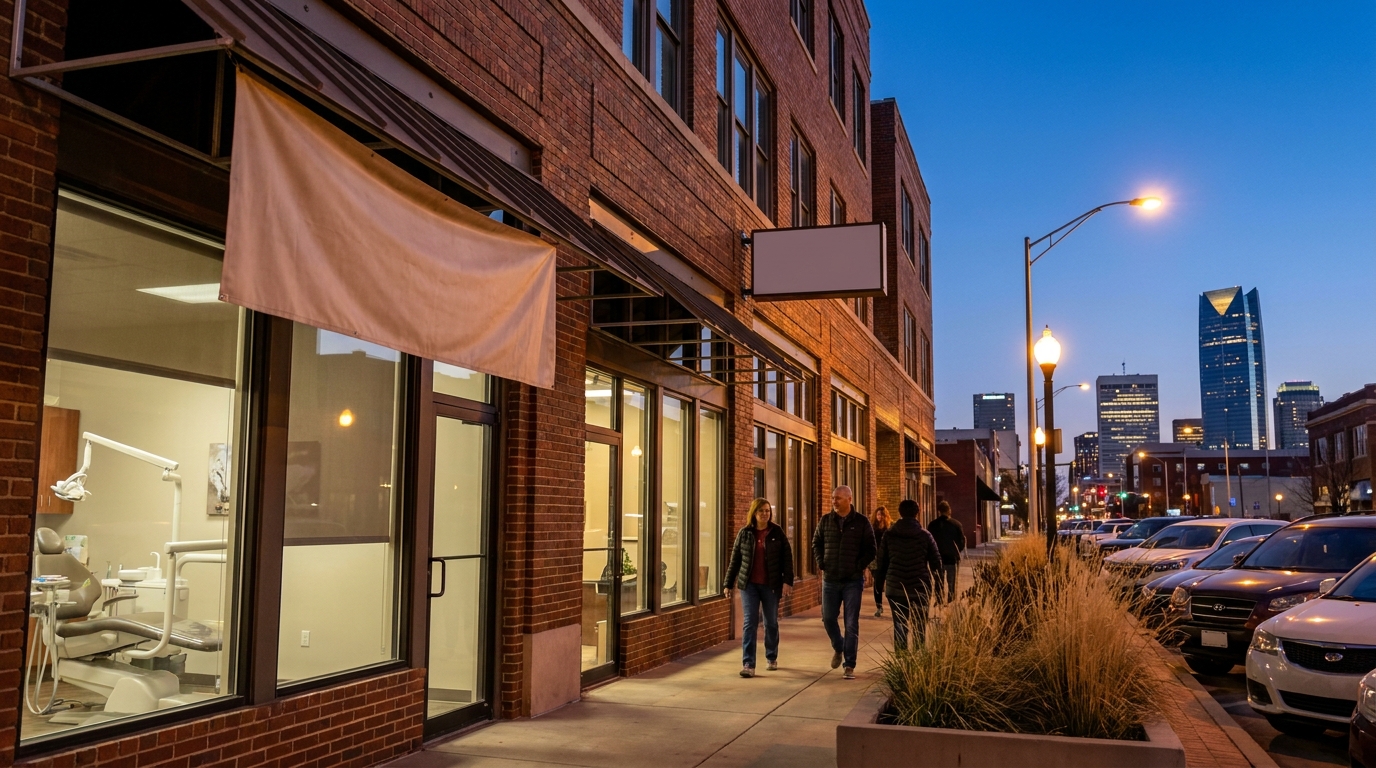
If you own a dental practice in Oklahoma City and you're still planning marketing one campaign at a time, you're not building a practice — you're renting patients. A long-term dental marketing strategy replaces that cycle with a compounding system: search authority, patient acquisition infrastructure, and retention loops that get more efficient every quarter. This guide walks through how to build one for the OKC market specifically.
What a Long-Term Dental Marketing Strategy Actually Is
A long-term dental marketing strategy is a 12-to-36-month plan that coordinates your website, local SEO, paid media, content, reviews, and internal patient systems into a single machine. It's not a list of tactics. It's the operating system your tactics run on.
Most practices in Oklahoma City confuse activity with strategy. Running Google Ads, posting on Instagram, and boosting a Facebook post is activity. A strategy defines which patients, from which zip codes, at what cost, using which channels, tracked by which numbers — and how each quarter builds on the last.
Why Oklahoma City Requires Its Own Playbook
OKC is not a generic mid-sized market. It has specific competitive dynamics that shape how a dental marketing roadmap should be built.
- Geographic sprawl. Patients in Edmond, Nichols Hills, Midtown, Bricktown, Yukon, Moore, and Norman behave differently. A single citywide campaign burns budget. Geo-segmented targeting matters more here than in denser metros.
- Seasonality tied to insurance benefits. Q4 (October through December) is when unused dental benefits drive a spike in elective and restorative bookings. Practices that don't have their infrastructure primed before Labor Day miss the window.
- Weather-driven scheduling gaps. Spring severe-weather season and mid-summer heat both create no-show patterns that a smart retention system should anticipate.
- Employer concentration. Large local employers around the Health Sciences Center, Tinker Air Force Base, and the downtown business district shape which PPO networks matter most in your area.
A dental marketing plan built for Dallas or Kansas City will not perform here. The roadmap has to be built around OKC's actual patient geography and calendar.
The Four Layers of a Long-Term Dental Marketing Roadmap
Think of your strategy as four stacked layers. Each one supports the ones above it. Skip a layer and the whole thing gets shaky.
Layer 1: Foundation (Months 1-3)
This is the infrastructure most practices try to skip. Don't.
- A fast, mobile-first website with clear service pages for every procedure you want to grow
- Google Business Profile fully optimized for your primary service area — down to specific OKC neighborhoods you serve
- Call tracking, form tracking, and a working CRM or practice management integration so you can measure cost per new patient
- A review generation system connected to your patient checkout flow
- Baseline SEO: schema markup, local citations, on-page structure
Nothing in Layer 2 works properly without Layer 1. Practices that run paid ads to a slow, unconvincing website are lighting money on fire.
Layer 2: Acquisition (Months 3-9)
Once the foundation holds, you turn on demand capture and demand generation.
- Local SEO: Ranking in the map pack for "dentist near me," "Invisalign OKC," "emergency dentist Oklahoma City," and neighborhood-level variants
- Google Ads: High-intent search campaigns for your most profitable procedures, geo-fenced to the zip codes where your best patients already live
- Meta ads: Awareness and remarketing for elective services like cosmetic dentistry, implants, and Invisalign
- Content and video: The educational assets that build trust between the first click and the booked appointment
Layer 3: Authority (Months 6-18)
This is where practices separate themselves. Authority is what makes AI search engines, Google, and patients cite you as the answer.
- Consistent long-form content answering the actual questions OKC patients ask
- Video content on YouTube — the second-largest search engine and increasingly cited by AI assistants
- Earned local media mentions and community sponsorships
- Structured data and content built to be extractable by ChatGPT, Perplexity, and Google AI Overviews
Authority compounds. A practice that starts producing genuine educational content in 2026 will be pulling in patients from that content in 2028 at effectively zero incremental cost. That's the whole point of long-term strategy.
Layer 4: Retention and Reactivation (Ongoing)
The cheapest new patient is an existing patient who comes back. A serious long-term dental patient growth strategy invests in:
- Automated recall for hygiene appointments
- Reactivation campaigns for patients inactive 12+ months
- Treatment plan follow-up for unscheduled diagnosed work
- Referral programs that turn happy patients into a distribution channel
Building Your Annual Dental Marketing Plan for OKC
An annual dental marketing plan for an Oklahoma City practice should be structured around three planning horizons at once: the year, the quarter, and the month.
Annual (set once, revisit quarterly): total marketing budget, target new-patient count, target case-acceptance value, primary service lines you're growing, and which OKC zip codes you're prioritizing.
Quarterly (adjust based on performance): channel mix, creative refresh, promotional calendar tied to insurance-benefit seasonality, and content themes.
Monthly (execution): ad spend allocation, content published, reviews requested, reactivation lists worked.
Here's a simple way to think about budget allocation once your foundation is in place:
- 40% acquisition (paid search, paid social, local SEO)
- 25% authority (content, video, PR)
- 20% retention and reactivation
- 15% infrastructure and measurement
These aren't sacred numbers. They're a starting point that gets tuned to your practice's actual data.
The Metrics That Actually Matter
Impressions and clicks are not the scorecard. A long-term dental marketing roadmap tracks a much shorter list:
- Cost per new patient, by channel
- Lifetime value per new patient, by source
- Case acceptance rate on high-value treatments
- Recall show rate
- Reactivation conversion rate
- Organic and AI-referred traffic growth quarter over quarter
If your marketing partner can't report on these, you're getting activity reports, not strategy.
Common Mistakes OKC Practices Make
- Chasing tactics. Jumping from TikTok to postcards to a new website every six months resets your compounding curve to zero.
- Underinvesting in the foundation. Running ads to a website that converts at 1% instead of 6% means paying six times too much for every patient.
- Ignoring geography. Treating a patient in Edmond and a patient in south OKC as the same prospect. Different demographics, different price sensitivity, different messaging.
- Skipping retention. Practices with weak recall systems have to acquire more new patients every year just to stand still.
- Measuring the wrong things. Optimizing for clicks instead of booked, showed, and accepted patients.
Frequently Asked Questions
How long does it take to see results from a long-term dental marketing strategy?
Paid channels can produce booked appointments in the first 30-60 days once the foundation is solid. Local SEO and content-driven authority typically show meaningful compounding gains between months 6 and 12, and continue to accelerate through year two. Anyone promising SEO results in 30 days is selling something else.
What should an Oklahoma City dental practice budget for marketing?
Established practices in OKC typically invest 5-8% of collections into marketing. Growth-stage or newly opened practices often need 8-12% for the first 18-24 months to build the foundation and gain share. The right number depends on your growth targets and your current patient acquisition cost — not on a rule of thumb.
Should we do marketing in-house or hire an agency?
Very few practices can hire the full stack in-house — SEO, paid media, content, video, analytics, and CRM integration — at a cost that makes sense. Most successful OKC practices run a hybrid: an internal team member who owns patient experience, reviews, and social, paired with an outside partner that runs the acquisition, authority, and measurement layers.
How does AI search change dental marketing planning in 2026?
Patients increasingly ask ChatGPT, Perplexity, and Google AI Overviews questions like "best dentist in Oklahoma City for implants" before they ever visit a website. Practices whose content is structured to be extracted and cited by AI engines get surfaced in those answers. Practices whose content isn't, don't. This is why the authority layer of your roadmap matters more every year.
Where to Go From Here
A long-term marketing strategy is what turns a dental practice from a business that has to hunt for new patients every month into one that compounds. It takes a foundation, an acquisition engine, an authority layer, and a retention system — planned in years, executed in quarters, measured in months.
Practice owners in Oklahoma City who want a marketing roadmap built specifically for their patient base, service mix, and growth goals can reach All In Practice Growth at https://www.allinpracticegrowth.com. We build multi-year dental marketing plans for OKC practices and run the systems behind them, so the strategy on paper actually shows up in the schedule.